The Law of Assumption
This framework involves deliberate belief modification and should not replace medical treatment, therapy, or necessary practical action. Those with psychosis, severe anxiety disorders, or dissociative conditions should consult a mental health professional before starting manifestation practices.
Overview
Category: Spirituality
Cost: Free
Time Commitment: 10-15 minutes daily (typically before sleep)
Primary Application: Manifesting desired outcomes, improving self-concept, opportunity recognition
The Law of Assumption is a mental and metaphysical framework centered on the principle that your deeply held assumptions about yourself and your reality shape your lived experience. Popularized by mystical teacher Neville Goddard in the mid-20th century, it posits that by assuming the feeling of a desired outcome as already achieved (particularly during the drowsy state before sleep), you impress that assumption onto your subconscious mind. This then influences perception, behavior, and the unfolding of events in alignment with that belief.
Unlike the Law of Attraction, which emphasizes thought frequency and vibration, the Law of Assumption focuses on feeling as if you already possess the object of your desire. The practice is not about forcing positive thoughts or monitoring every fleeting mental state, but about inhabiting a specific assumption consistently enough that it becomes your natural expectation. This creates a psychological shift that primes the reticular activating system to notice relevant opportunities, increases confidence and motivation, and reduces the self-sabotage that comes from operating from a place of lack or doubt.
This framework can be approached from multiple perspectives. Some practitioners view it as a literal metaphysical principle where consciousness precedes and shapes material reality. Others interpret it purely psychologically, as a method for leveraging placebo effects, visualization, and belief to optimize behavior and perception. Both interpretations can coexist, and the practical utility remains regardless of metaphysical stance.
The Law of Assumption is valuable not only as a method of manifesting, but also as a psychological tool to manipulate one's identity and paradigm. It works best when integrated with standard self-improvement practices and goal-oriented action. This article presents the framework in practical terms, explores both its psychological and metaphysical dimensions, provides clear implementation guidance, and addresses the distortions that have emerged in online manifestation communities.
History
"You are already that which you want to be, and your refusal to believe it is the only reason you do not see it."
— Neville Goddard
Origins
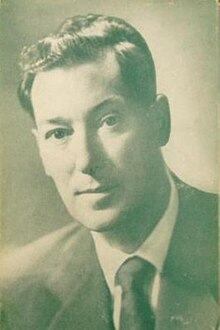
While the concept of "faith creates reality" appears in various religious texts dating back millennia, the specific terminology of the "Law of Assumption" is primarily attributed to Neville Goddard (1905–1972), a Barbadian-born mystic and lecturer who taught in the United States from the 1930s until his death. Neville studied under a teacher known only as Abdullah, described as an Ethiopian rabbi who instructed him in Kabbalah, Hebrew, and the metaphysical interpretation of scripture. Neville's work synthesized mystical Christianity, New Thought philosophy, and his own direct experiences with consciousness and manifestation.
Neville's central claim was radical: the God described in the Bible is not an external deity; instead, it is human imagination itself. He reinterpreted biblical narratives as psychological allegories about states of consciousness rather than historical events. Prayer, in his framework, was not petition to an external power but the act of assuming a desired state so completely that it feels natural and inevitable. He taught that by entering a specific state of consciousness (the feeling of the wish fulfilled) and persisting in that assumption, external reality would eventually conform to match it.
His lectures and books, including The Power of Awareness, Feeling is the Secret, and The Law and the Promise, emphasized direct experience over dogma. He encouraged students to test his claims empirically by practicing his techniques and observing results. While his language was often biblical and metaphorical, his core teaching was practical: assume the state you desire, feel it as real, and live from that assumption until it hardens into fact.
Evolution of Practice
After Neville's death in 1972, his work remained relatively obscure outside of New Thought circles until the internet era brought a massive resurgence of interest. Social media platforms have introduced his ideas to millions, particularly young adults seeking agency and control in uncertain times. This popularization has led to both wider accessibility and significant distortion.
Theory
Core Concepts
Consciousness is the Only Reality
Neville's central axiom is that consciousness precedes and creates physical reality. He taught that the external world (the "3D") is a delayed reflection of your internal state of consciousness (the "4D"). To change what you experience externally, you must first change your assumptions internally. Neville Goddard explained this metaphysical perspective succinctly in his book Feeling is the Secret:
"Consciousness is the one and only reality, not figuratively but actually. This reality may for the sake of clarity be likened unto a stream which is divided into two parts, the conscious and the subconscious. In order to intelligently operate the law of consciousness, it is necessary to understand the relationship between the conscious and the subconscious.
The conscious is personal and selective; the subconscious is impersonal and non-selective. The conscious is the realm of effect; the subconscious is the realm of cause. These two aspects are the male and female divisions of consciousness. The conscious is male; the subconscious is female.
The conscious generates ideas and impresses these ideas on the subconscious; the subconscious receives ideas and gives form and expression to them.
By this law – first conceiving an idea and then impressing the idea conceived on the subconscious – all things evolve out of consciousness; and without this sequence, there is not anything made that is made."
The Feeling of the Wish Fulfilled
The Law of Assumption functions through embodying the emotional and sensory experience of already having what you desire. Neville emphasized that "feeling is the secret." This does not necessarily mean high-energy excitement or forced positivity. It usually refers to the feeling of naturalness, relief, satisfaction, and completion that comes after a desire is fulfilled.
For example, if you desire wealth, the goal is not to desperately state "I am rich" while worrying about your bills. The goal is to vividly imagine a scene that implies you are already past the point of achieving wealth (such as enjoying the comfort of a morning coffee at your ideal home or smiling as you check your bank statement) and to immerse yourself in the sensory and emotional reality of that scene until it feels natural and inevitable.
This practice works because the subconscious mind does not distinguish well between vividly imagined experiences and real ones. When you repeatedly visualize a desired outcome with sensory detail and emotional engagement, your brain is likely to treat it and react to it as if it were a real event. This effect proves quite useful for modifying your subconscious beliefs and behaviors when leveraged intentionally.
Thinking From vs. Thinking Of
Most people think of their goals, viewing them as distant objects they lack. The Law of Assumption requires thinking from the goal, viewing the world from the perspective of the person who already has it. This shift in perspective changes how you interpret events, how you make decisions, and how you carry yourself.
Neville emphasized "living in the end". Do not concern yourself with the means of how or when your goal will manifest. Although this is a responsible mindset for general self-improvement, it does not apply while you practice the Law of Assumption. Instead, skip all the way to the end, after what you desire has already been attained, and look at it from this vantage point.
For example, if you are trying to build muscle, thinking of the goal means looking at your current body and wishing it were different. Thinking from the goal means imagining yourself as someone who is already muscular and asking, "How does that version of me train? What does he eat? How does he carry himself?"
The State Akin to Sleep (SATS)
Neville's primary technique is practicing visualization during the hypnagogic state (the drowsy period between waking and sleeping). This state is theorized to bypass critical conscious resistance and implant suggestions directly into the subconscious. The practice involves lying down, relaxing the body, and looping a short scene that implies your desire is fulfilled. You engage all senses (sight, sound, touch, emotion) and repeat the scene until you fall asleep while inhabiting the feeling of fulfillment.
From a psychological perspective, this practice functions as a form of self-hypnosis. The hypnagogic state is characterized by increased suggestibility and reduced activity from the conscious "rational" mind, making it easier to impress new beliefs onto the subconscious. Neville, in his book Feeling is the Secret, taught readers to "Never go to sleep feeling discouraged or dissatisfied. Never sleep in the consciousness of failure." In other words, even on a bad day, one should end every single night on a positive note by inducing a feeling of the wish fulfilled.
Everyone Is You Pushed Out (EIYPO)
This teaching is often misinterpreted in a solipsistic manner to mean that other people have no independent consciousness and are merely puppets or reflections of your assumptions. A more productive interpretation is that your assumptions about people influence how you perceive and interact with them, which in turn influences how they respond to you. If you assume someone is hostile, you may unconsciously act defensively, which elicits defensiveness in return. If you assume they are kind, you may approach warmly and receive warmth. This is not magical control but basic interpersonal dynamics and confirmation bias. The useful takeaway is to examine your projections and biases, not to attempt to override another person's autonomy.
The Bridge of Incidents
The bridge of incidents are described as a sequence of events that happen in your life which lead to the eventual desired outcome. The reported process differs from individual to individual and their goal; this can range from a series of pleasant and lucky events that feel unnaturally smooth, to a stressful and disappointing series of undesirable situations that eventually redirect you towards obtaining the object of your desire. Regardless of how the bridge of incidents plays out, it is important to remain steadfast in your assumption, even in the face of adversity. Do not allow external circumstances to break your resolve.
Mechanism of Action
Psychological Mechanisms
The Law of Assumption operates through several well-documented psychological processes. The reticular activating system (RAS) filters sensory input based on relevance and salience. When you vividly imagine and emotionally invest in a goal, your RAS begins prioritizing information related to that goal, making you more likely to notice opportunities, resources, and connections you would have otherwise overlooked.
Belief also shapes behavior directly. If you genuinely assume success is inevitable, you act with greater confidence, take more calculated risks, persist longer through setbacks, and interpret obstacles as temporary rather than definitive. This creates a self-fulfilling prophecy where the assumption drives the actions that produce the result.
Emotional rehearsal through visualization reduces anxiety and builds familiarity with desired outcomes. The brain does not fully distinguish between vividly imagined experiences and real ones, so repeated visualization creates neural pathways that make the real event feel less foreign and more achievable.
The hypnagogic state leveraged in SATS increases suggestibility and reduces critical resistance, allowing new beliefs to be implanted more easily. This is similar to clinical hypnotherapy, which uses relaxed, focused states to address phobias, habits, and limiting beliefs.
Finally, the placebo effect demonstrates that belief alone can produce measurable physiological changes. Studies show that patients given inert substances often experience real symptom relief when they believe the treatment is effective. While the Law of Assumption extends beyond placebo (involving perception, behavior, and opportunity recognition), the principle remains: belief influences reality through both psychological and physiological pathways.
Metaphysical Perspective
From a metaphysical standpoint, the Law of Assumption rests on the idea that consciousness is not merely a byproduct of matter but a fundamental aspect of reality itself. In this view, observation and intention play a role in collapsing probabilities and shaping outcomes. Consciousness precedes matter, and by shifting your inner state, you navigate through a field of potential realities toward the one aligned with your assumption.
Neville described this as moving between "states" or parallel timelines. When you assume a new state, you effectively shift your attention to a version of reality where that assumption is true, and the external world rearranges itself to match. This interpretation is speculative and not empirically verifiable, but it resonates with practitioners who have experienced outcomes that seem to defy purely mechanistic explanations.
Whether you accept the metaphysical model or not, the practical utility remains: focused imagination combined with emotional conviction produces shifts in perception, behavior, and external circumstances that support goal achievement.
Common Misconceptions
"You Are Always Manifesting"
This belief suggests that every thought you have is creating your reality and therefore you must maintain constant positivity. This is both false and psychologically harmful. Humans naturally experience a full range of emotions, including fear, doubt, sadness, and anger. These emotions serve important evolutionary functions.
You are not your thoughts. Fleeting negative thoughts do not doom you to negative outcomes. What matters are your deeply held beliefs, not every passing mental fluctuation. Instead of trying to suppress negative thoughts (which creates exhausting hypervigilance), focus on returning to the desired assumption during your practice and allowing doubts to pass without resistance during the day.
"If Something Bad Happened, It's Your Fault. You Manifested It"
Sometimes bad things happen due to factors entirely outside your control: genetic illness, accidents, systemic injustice, other people's harmful actions. The productive frame is not "you caused this" but "you control how you respond." You cannot always control what happens to you, but you can control your interpretation, the meaning you assign, and the actions you take moving forward. Responsibility is not the same as blame.
"Manifestation Replaces Action"
Neville often spoke in metaphorical, biblical language and told stories of people who manifested outcomes that still required their participation (working at a job, paying for a home, showing up to opportunities). The point is not to eliminate action but to ensure action feels inspired and natural rather than desperate and forced. For the vast majority of goals, the healthiest approach integrates belief and action. Assume success, visualize the outcome, and then take concrete steps toward making it real.
Inaction is only advisable for goals where taking action is impossible or futile due to being outside your immediate sphere of influence. For example, if you want to move to a particular city but don't currently have the means, imagining yourself already there can help open up new opportunities. However, once this opportunity arises, it is important to act on it and seize it.
The "SP" Fallacy
Although undeservingly popular in the manifestation community, attempting to manifest a specific romantic partner, especially an ex or someone uninterested in you, is one of the most psychologically damaging applications of this practice. It encourages obsession, denial of reality, and prolonged attachment to someone who may have moved on or be incompatible with you. It is important to recognize that other people have their own consciousness, desires, and agency independent of yours.
Neville Goddard himself discouraged this practice in a 1968 lecture titled Power, noting that people who insist on "that man or no man" often end up happily married to someone else entirely once they let go of the fixation. This principle is universally applicable regardless of the gender one is attracted to. Additionally, the emotional undercurrents of heartbreak and unrequited love make it extremely difficult to truly inhabit a feeling of the wish fulfilled.
If someone doesn't want you, that's fine; accept that and find someone even better. The healthier approach is to focus on self-concept, emotional healing, and engaging in manifestation work for a hypothetically ideal partner. Focus on the general qualities you desire in a partner (personality, appearance, shared values, emotional availability) and remain open to who that person might be, rather than fixating on a specific individual.
Implementation
Prerequisites
A willingness to suspend disbelief during practice is essential; constant doubt throughout will undermine your immersion and make it difficult to achieve the feeling of the wish fulfilled. You need the ability to visualize with some sensory detail (sight, sound, touch, emotion) or, if visualization is difficult, the ability to engage with affirmations or scripting.
Practicing the Law of Assumption is entirely free and requires no specialized equipment.
Helpful, But Not Required
A quiet space for visualization without interruption, a journal for tracking insights and progress, and familiarity with basic mindfulness or meditation practices to notice and release intrusive thoughts without judgment. Establishing a regular daily practice of 5-15 minutes, ideally before bed, allows for frequent, consistent conditioning of the subconscious mind.
Contraindications
If you have a history of psychosis, dissociative disorders, severe reality-testing impairment, or obsessive-compulsive tendencies, consult a mental health professional before beginning manifestation work. If you find yourself using spiritual practices to avoid taking responsibility for your actions, to obsess over outcomes you cannot control, or to bypass emotional processing, you may need to take a step back and address underlying psychological issues through therapy.
Getting Started
Step 1: Define Your Desire with Clarity
Identify a specific, tangible outcome you want to manifest. Vague desires produce vague results because your subconscious has no clear target. Instead of "I want to be successful," define what success looks like. Examples include: "I want to earn $X annually in a career I find meaningful," "I want to deadlift 400 pounds," "I want to be in a committed relationship with someone who shares my values."
Specificity helps your brain recognize when opportunities align with your goal and allows for manifestations to be more aligned with your ideal outcome.
Step 2: Construct a Scene That Implies Fulfillment
Rather than visualizing the journey or struggle, create a short mental scene (15-30 seconds) that implies your desire is already achieved. This should be something that would naturally occur after your goal is accomplished.
If you want a new job, imagine shaking hands with your new boss and hearing "Welcome to the team." If you want better health, imagine waking up feeling energized and vitality coursing through your body. If you want a relationship, imagine holding hands with your idea of the perfect significant other and feeling all the wonderful feelings you would feel if you were in love.
The scene should feel natural and emotionally resonant, not forced or elaborate.
Step 3: Practice SATS (State Akin to Sleep)
Each night before bed, lie down comfortably and relax your body. As you drift into the drowsy hypnagogic state between waking and sleeping, loop your chosen scene repeatedly. Engage all your senses: What do you see? What do you hear? What physical sensations and emotions do you feel? Immerse yourself in the scene as if it is happening now.
The goal is not to analyze the scene but to fall asleep while inhabiting the feeling of the wish fulfilled. This impresses the assumption onto your subconscious mind. If you are not naturally drowsy at bedtime, you can practice during a midday rest or immediately upon waking, though the pre-sleep state is considered most effective.
Step 4: Live Your Day with Quiet Confidence
After your visualization session, go about your day normally. You do not need to obsess over the outcome or monitor every thought. The manifestation work happens during SATS; the rest of the day is for taking inspired action and living your life.
If doubts arise, acknowledge them without judgment and refocus on your assumption when appropriate. You do not need to suppress doubt; simply return to the feeling of fulfillment more often than you dwell on lack.
Step 5: Take Inspired Action
Pay attention to intuitive nudges, opportunities, or ideas that arise naturally after your visualization practice. If you feel compelled to apply for a job, reach out to someone, adjust your routine, or invest in a skill, act on it. Manifestation primes your mind to recognize and pursue opportunities; it does not replace the need to engage with the world. The integration of belief work and action produces results.
Common Variations
Scripting
If visualization is difficult, write in a journal as if your desired outcome has already occurred; this can be done on paper or digitally. Describe your life in detail from the perspective of someone who has achieved the goal. Write in present tense with sensory and emotional detail. Reread your script before bed to reinforce the assumption.
Affirmations
Short, present-tense statements like "Opportunities flow to me effortlessly" or "I live in financial abundance" can be repeated throughout the day or while practicing SATS to reinforce belief. However, affirmations work best when paired with emotional conviction. Mechanically repeating words you do not believe produces little effect. The feeling behind the words matters more than the words themselves.
The Lullaby Method is a technique Neville taught which involves affirmations while in a state akin to sleep. While in bed, repeat a short phrase that implies general fulfillment, such as "It is finished," "Thank you," or "Isn't it wonderful?" while falling asleep.
Revision
Revision is a technique where you mentally rewrite negative past events to have positive outcomes. In his lecture "Pruning Shears of Revision," Neville described reviewing the day before sleep, identifying events that did not align with your ideal experience, and mentally rewriting them to conform to what you wish had happened. For example, if you had an awkward social interaction, you might replay it in your mind with you responding confidently and the interaction going smoothly. From a practical sense, revision releases emotional charge from past mistakes and reprograms your subconscious to expect better outcomes in the future.
Self-Concept Work
Rather than manifesting specific external outcomes, you can use SATS to shift your core identity and self-perception. This involves imagining yourself embodying the qualities, traits, and confidence of your ideal self. For example, instead of visualizing having a thing, instead visualize a timeline where you already meet all of your standards of perfection. How does this perfect version of yourself look, think, act? What does an average day look like for them? See yourself as that person already. Alternatively, you can repeat affirmations or write scripts, even highly exaggerated ones, claiming yourself to already be the kind of person you wish to become.
Self-concept work is particularly powerful because it creates a foundation from which external manifestations flow more naturally. With enough repetition and conviction, your subconscious mind will accept your new identity, overwriting old insecurities and limiting beliefs. When you genuinely believe you are the kind of person who has success, valuable skills, charisma, health, or whatever you desire, your behavior, perception, and opportunities align automatically.
Gratitude Integration
Gratitude is a scientifically-backed therapeutic practice for improving mental health. When combined with manifestation, it serves as a powerful vehicle for inducing strong emotional resonance and entering a conscious state of abundance. This can be applied to things you are grateful for in your present life, or you can express gratitude for already possessing the object of your desire, even if you do not yet possess it in physical reality. I frequently have used the latter to great effect.
Expected Effects
Initial Experience (Weeks 1-4)
When you first practice SATS, you may feel skeptical or awkward. The visualization may feel forced or unconvincing. Your critical mind may intrude with doubts. This is normal. The goal is simply to practice consistently and immerse yourself in imagination, regardless of whether you "believe" it is working.
You may notice small shifts in mood or perspective. You might feel slightly more optimistic or confident, or you might notice opportunities you previously overlooked. These are early signs that your RAS is aligning with your goal.
After 2-3 Months of Consistent Practice
If you pair visualization with concrete action, you will likely see tangible progress toward your goal. This might manifest as new opportunities, helpful coincidences, or increased motivation and persistence. You may notice that obstacles that once felt insurmountable now feel manageable.
Your emotional relationship to the goal shifts. Instead of feeling desperate or anxious, you begin to feel quiet confidence that the outcome is inevitable. This reduces self-sabotage and increases willingness to take risks.
Long-Term Changes (6-12+ Months)
With sustained practice, manifestation becomes a background mental habit rather than a deliberate effort. You naturally assume positive outcomes, notice opportunities, and act on them without overthinking. Your self-concept shifts to align with your goals.
You accumulate evidence of success, which reinforces belief and creates a positive feedback loop. You become less reactive to setbacks because you trust in your ability to navigate challenges and continue progressing.
Progress Indicators
Process Metrics
You are practicing SATS consistently most nights before bed. You are able to vividly imagine your scene with sensory detail and emotional engagement. You are taking concrete action toward your goal during the day. You are noticing intrusive doubts without spiraling into rumination or self-criticism.
Outcome Metrics
You feel more confident and less anxious about your goal. You notice opportunities, resources, or connections related to your goal that you did not see before. You receive external validation or progress markers. You have shifted from "I hope this works" to "I expect this to work." Most importantly, you are making measurable progress toward your goal.
To a more advanced level, if the object of your desire no longer excites you, this is a sign you have deeply saturated the subconscious mind. For example, you may begin to take the object of your desire for granted while thinking of it in passing and feel a sense of boredom or emotional indifference when imagining it in SATS. This is typically when you will want to participate in what Neville Goddard referred to as the Sabbath, a reference to Judeo-Christian scripture in which God rests on the seventh day of creation.
To participate in the Sabbath, you simply take an extended break from doing manifestation work for your given goal. If you are taking action, you keep working toward it while moving with confidence that it will come; if not, you simply move on with your life and forget about it. It is typically following the Sabbath that my best manifestations have occurred, often when I least expected them to happen.
Addressing Hindrances
Risk Factors
Spiritual Bypassing
One of the most dangerous pitfalls is using manifestation to avoid dealing with real problems. If you are struggling with trauma, mental illness, unhealthy relationships, or practical challenges, manifestation work alone will not solve these issues. You need therapy, medical care, financial planning, and concrete problem-solving. Manifestation supplements action; it does not replace it.
Obsession and Attachment
Manifestation works best when you hold your desire lightly. If you become obsessively attached to a specific outcome, you create desperation and anxiety, which undermines the confidence you are trying to cultivate. You must care enough to practice but be detached enough to allow the outcome to unfold naturally. If you find yourself checking for results constantly, ruminating about the outcome, or feeling devastated when circumstances do not immediately reflect what you imagined, you are too attached. Step back and refocus on your own well-being.
Passivity and Magical Thinking
If you believe that visualization alone will deliver results without any effort on your part, you will waste time and opportunities. Neville's phrase "do nothing" has been seriously misunderstood. He did not mean literal inaction at all times. He meant "trust in the process and do not force it." His stories often involved people taking natural, inspired action after an opportunity related to their manifestation arises. The job offers still required showing up to interviews. The homes still required signing leases and paying rent. If a package arrives at your door requiring a signature, you must answer the door to receive it.
Troubleshooting
"I'm Not Seeing Progress"
You may be visualizing passively without taking action, or you may be holding the outcome too tightly. You may also be practicing inconsistently or without emotional engagement. Evaluate honestly whether you are taking concrete steps toward your goal during the day. Check whether you are actually feeling the wish fulfilled during SATS or just mechanically looping images and words. Emotion and conviction matter more than the contents.
Additionally, stop looking for results constantly; this implies you do not have it and induces a state of lack. People who have something do not look for signs that it is coming because it is already there.
"I Keep Having Doubts and Negative Thoughts"
This is normal. You are human. Thoughts are not the same as beliefs, and fleeting doubts do not undo your manifestation work. Practice mindfulness. When a doubt arises, acknowledge it without judgment and let it pass. Redirect your attention back to your assumption when appropriate. Continue to overwrite negative core beliefs with self-empowering ones during your nightly practice. Over time, doubts will lose their power.
"I Manifested Something Small but Not My Big Goal"
You may have genuinely believed in the small outcome but still hold limiting beliefs about the big one. You should ask yourself if there are insecurities, doubts about your abilities, or fears present that may be preventing you from fully inhabiting the feeling of the wish fulfilled during your practice.
Alternatively, the big goal may require more time than you have invested. Celebrate the small win as evidence that the process works. For the big goal, break it into smaller milestones and visualize those. Ensure you are taking consistent action.
"I Feel Like I'm Lying to Myself"
This is a normal feeling, especially when you are first starting out. However, something to keep in mind is that you do not need to actually believe in what you're visualizing for it to work. It is sufficient enough to just suspend disbelief and treat it as an immersive imaginal exercise where you choose to inhabit a state of mind temporarily.
Something else to consider: Athletes visualize perfect performance before competition even though they have not done it yet. Surgeons mentally rehearse procedures. You are doing the same.
When to Seek Professional Support
If manifestation practice exacerbates anxiety, depression, or obsessive thinking, stop and consult a therapist. If you are using it to avoid dealing with trauma, mental illness, or serious life problems, you need professional help first and foremost. If you have a pattern of using manifestation to avoid responsibility or to blame yourself for things outside your control, therapy can help you develop healthier cognitive patterns.
Research
Scientific Evidence
There is no peer-reviewed scientific evidence supporting the metaphysical claim that thoughts or beliefs directly alter external reality through nonphysical means. However, substantial evidence supports the psychological mechanisms underlying manifestation practices.
Neuroscience research demonstrates that the brain activates similar neural pathways when imagining an action as when physically performing it, supporting the use of mental rehearsal for skill development.[1] Separately, studies on mental imagery in applied contexts show that vivid, repeated visualization can improve performance and reduce anxiety in athletes, musicians, and performers, though the mechanisms connecting neural simulation to these outcomes require further research.
Research on self-affirmation theory shows that affirming core values or positive self-concepts buffers against stress, improves problem-solving under pressure, and increases openness to behavior change.[2] This aligns with the Law of Assumption's emphasis on assuming positive identity-level beliefs.
The reticular activating system and related thalamic nuclei are well-documented brain structures involved in filtering sensory input and modulating awareness based on salience.[3] While some practitioners suggest that goal-setting may influence attentional filtering, explaining subjective experiences of synchronicity, this specific mechanism has not been empirically demonstrated in neuroscience research.
Research on placebo effects demonstrates that expectations shaped by treatment context can produce measurable physiological changes, including altered brain activity and clinical outcomes.[4] This suggests contextual factors can influence outcomes even when treatments lack specific pharmacological action, particularly in domains influenced by psychological and physiological state.
Studies on gratitude practices show that regularly expressing gratitude improves mood, increases life satisfaction, and enhances overall well-being.[5] This supports the integration of gratitude with manifestation practices.
Collectively, these studies demonstrate that focused visualization, emotional conviction, and belief can influence both psychological state and behavior. While this does not prove metaphysical claims, it validates the practical utility of the Law of Assumption as a tool for priming opportunity recognition, building confidence, and supporting goal achievement.
Anecdotal Evidence
Manifestation communities contain numerous testimonials of people achieving goals after focused visualization practice. Common themes include career changes, improved health, relationship formation, and financial windfalls. However, these accounts are subject to confirmation bias, survivorship bias, and lack of controlled conditions. The most compelling anecdotal evidence comes from practitioners who combine SATS with disciplined action and report that the primary benefit was psychological (increased confidence, reduced anxiety, clearer focus) followed by external shifts in circumstances that aligned with their visualization.
Author's Notes
My Perspective
I approach the Law of Assumption as a chaos magician, treating it as a tool to be used and discarded at will rather than an ideology to constantly live by. I am a pantheist and panpsychist who agrees with the concept that consciousness precedes matter, but I also recognize that the physical world has its own dynamics and that I live primarily through a material lens as a human being.
I view manifestation as one tool in a larger toolkit that includes physical training, skill development, strategic planning, and deliberate action. I practice a duality: during the day, I am rational, realistic, and action-oriented. At night, during SATS, I inhabit the consciousness of my ideal self, who already embodies the traits I wish to embody and already possesses everything I wish to possess without compromise. This integration allows me to leverage the best aspects of both worlds.
I think Neville Goddard was a brilliant thinker and an effective teacher. His synthesis of mystical Christianity, Kabbalah, and New Thought philosophy created a framework that has genuinely transformed lives. However, I do not treat him as an infallible prophet. I take his teachings metaphorically, not literally. When he says "you are God," I interpret that as "you have creative power over your experience" rather than "you are literally omnipotent." When he says "do nothing," I interpret that as "don't force it" rather than "you have permission to be lazy every day and still get what you want if you believe you have it hard enough." His biblical, grandiose language served his audience and teaching style, but it requires translation for modern, practically-minded practitioners.
The manifestation community that has formed around Neville's work contains both sincere seekers and people who have distorted his teachings into something toxic. At its best, the community provides support, shared experiences, and mutual encouragement for those working to improve their lives. At its worst, it promotes obsession over specific people, blames victims for their circumstances, encourages passivity disguised as faith, and creates echo chambers of toxic positivity where doubt is treated as heresy.
I have zero patience for the latter. The Law of Assumption is a tool, not a religion. Neville was a man, not a god. His teachings contain profound insights, but they also contain contradictions, metaphorical language that should not be taken literally, and culturally specific framing that does not translate well to modern secular contexts. The useful parts should be extracted and applied; the rest should be discarded.
If you practice manifestation, do so with eyes open. Test it empirically. Pair it with action. Reject anyone who tells you to ignore reality, suppress your emotions, or blame yourself for things outside your control. Use it to support your goals, not to avoid dealing with real problems.
Personal Experience
2024: Visualizing My Way to Better Health
My most successful manifestation was in the spring of 2024, when I cured what I believed to be sleep apnea. For weeks, I woke up exhausted every morning despite sleeping at least eight hours a night. My cognition was impaired, my energy nonexistent, and I had a sleep study scheduled two months out with no openings for sooner appointments. I tried everything: throat exercises, dietary changes, positional adjustments, supplements. Nothing worked.
Out of desperation, I decided to test Neville's teachings. I spent one night practicing SATS, vividly imagining myself waking up energized and jumping out of bed with vitality. I fell asleep while looping that scene. The next morning, I woke up feeling completely normal. The issue never returned. I followed through with the sleep study weeks later, and everything came back within the normal range. The doctors confirmed I did not need a CPAP or any medical intervention. That experience dispelled any doubts I had as to the efficacy of the Law of Assumption. I have since used manifestation work for various other goals with mostly positive results.
2025: Using Self-Concept to Manifest a Relationship
My second most successful manifestation is my current relationship. In early 2025, I was struggling heavily in dating for multiple years in a row and had a multitude of insecurities in regards to my perceived lack of desirability on a personality level (which I attributed to my neurodivergence, introversion, nerdy personality, niche interests, etc) despite being an otherwise handsome and athletic bisexual man. Although I found it easy to get likes and matches on dating apps, the dating pool in my hometown left much to be desired and I was encountering countless disappointing experiences, which grew to become very demoralizing. I was getting ghosted, rejected, dry texted, and treated as a non-priority on a regular basis.
By the spring of that same year, I decided to take a break from dating so that I could focus on preparing for my upcoming study abroad journeys for the summer. I was also, coincidentally, heavily involving myself in self-concept work. I directly contradicted numerous insecurities I had by repeating affirmations during my nightly SATS practice, replacing them with an exaggeratedly positive image of myself being extremely attractive, extremely charismatic, and finding dating easy because I don't have to try, I can have whoever I want and they'll always make the first move. Was it true in that moment? Absolutely not, but it paved the way for future results.
By the time I began my summer travels of studying abroad and additional solo travel, I was still burnt out from dating despite taking a long break, but I had accumulated 3 months' worth of self-concept work. I made it a point to forget about dating; instead, my only aim was to make friends and immerse myself in the host country's culture. In every interaction I had, I moved with full confidence and self-assurance, not caring whether people liked me or not. I liked myself, and that was enough. Numerous people ended up developing interest in me during my journeys, and several months in when I was least looking for it, I ended up in a satisfying relationship with someone my type.
Bottom Line
Strengths
The Law of Assumption is a powerful tool that is free, requires minimal time investment, and can be applied to virtually any goal. When practiced consistently, it reprograms the subconscious mind into being more confident, and the process of achieving your goals will feel smoother, almost as if fortune is on your side. You may run into pleasant surprises during your journey when you least expect it, or experience a sense of deja vu when something you visualized happens just as you imagined it. Whether this is happening via metaphysical means or psychological means is up to your interpretation.
Weaknesses
It is easily misunderstood and distorted into magical thinking, passivity, spiritual bypassing, and victim-blaming. This is especially true if you get most of your manifestation information from social media instead of books and personal experience. You will need to be especially careful of the information you consume on manifestation, as much of it can lead you astray. It requires emotional conviction and consistency, which many people struggle to maintain.
Who Should Try This
Anyone who is seeking an efficient way to expedite their success in life. The Law of Assumption is a truly versatile tool that can help with:
- Improving self-concept, confidence, and willingness to take calculated risks
- Identifying opportunities and preventing self-sabotage
- Manifesting positive life circumstances and higher levels of self-improvement
- Modifying internal belief systems
Those who are willing to take action in addition to manifestation work, test the framework empirically rather than accepting it on faith, and adjust practices based on personal preference and experience will experience the best results.
My Recommendation
If you are working toward a meaningful goal, try practicing SATS for 30 days. Visualize your desired outcome vividly before sleep each night, then wake up and take concrete action toward making it real. Track your progress and evaluate honestly whether the practice improves your confidence, focus, and results. If it helps, keep it. If it does not, discard it. Do not turn it into an identity or a dogma. Treat it as one tool among many.
See Also
Additional Resources
Online Resources
- Read Neville Goddard — Read Neville Goddard's books for free
- Neville Goddard Lectures (YouTube) — Original recordings; listen with discernment and extract practical techniques
Books
- The Power of Awareness by Neville Goddard — Core text on the Law of Assumption; read critically and extract what is useful
- Feeling is the Secret by Neville Goddard — Short, practical guide to SATS and assumption work
- The Last Law of Attraction Book You'll Ever Need to Read by Andrew Kap — Practical approach to manifestation with emphasis on gratitude
References
Jeannerod, M. (2001). Neural simulation of action: a unifying mechanism for motor cognition. NeuroImage, 14(1), S103-S109. ↩︎
Cohen, G. L., & Sherman, D. K. (2014). The psychology of change: Self-affirmation and social psychological intervention. Annual Review of Psychology, 65, 333-371. ↩︎
Smythies, J. (1997). The functional neuroanatomy of awareness: with a focus on the role of various anatomical systems in the control of intermodal attention. Consciousness and Cognition, 6(4), 455-481. ↩︎
Wager, T. D., & Atlas, L. Y. (2015). The neuroscience of placebo effects: connecting context, learning and health. Nature Reviews Neuroscience, 16(7), 403-418. ↩︎
Emmons, R. A., & McCullough, M. E. (2003). Counting blessings versus burdens: an experimental investigation of gratitude and subjective well-being in daily life. Journal of Personality and Social Psychology, 84(2), 377-389. ↩︎